
On the 19th anniversary of the assassination of Hrant Dink, we come together to remember his struggle, to continue the pursuit of justice, and to deepen our confrontation with truth. This year, the conversations will focus on Hrant Dink’s life and articles, the 30-year history and struggle of Agos newspaper, and our narratives of January 19 within our intersecting memories.
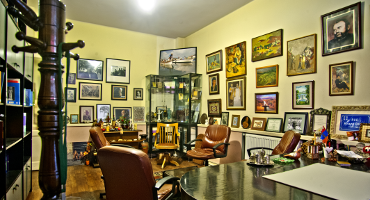
  • All events will be held at the 23.5 Hrant Dink Site of Memory.
  • A separate registration form must be completed for each event.
  • Conversations will be held in a hybrid format (in person and via Zoom), wheras the workshops can only be attended in person.
  • In-person participation is limited to 40 people per conversation and 20 people per workshop.
  • The language of the events is Turkish.
  • Throughout the week, guided tours of the 23.5 Hrant Dink Site of Memory will be offered. To participate in a guided tour, it is sufficient to select the “I will join the guided tour” option on the registration form.
Monday, January 12
'Memory Too Low for Words' Film Screening

13:00 - Guided Tour
15:00 - Film Screening


The film ‘Memory Too Low For Words’ devised and produced by Ümit Kıvanç, which transforms Hrant Dink’s words to color, shape and sound, lays before us the ‘errors’ in the ‘system’ which did not allow space for Hrant Dink and his words You can watch the film to witness Hrant Dink’s passion which made him a target, and to hear from his own voice his dreams for Turkey and the world.

To register for this event please complete the form.
January 19 in Our Memories

Workshop Facilitator: Aylin Vartanyan

17:00 - Workshop


19 January, 2007 is not merely a date; for many, it is a threshold woven into everyday life. For some, it returns as a place, sound, sentence, crowd, or silence. For others, it remains as an inherited question or unnamed legacy.

In this workshop, we will explore together the traces that January 19 left in collective memory, how it touched our lives, and what it entrusts to us today. If you have memories of that day, you are welcome to bring them in. If what you remember is a hollow state, we can also talk about where and through which words you first encountered this story. Where were you when Hrant Dink was murdered? In what ways do the emotions you felt that day still echo in your body, language, and thoughts? What does January 19 evoke for you? And, perhaps more important, what do you wish to take with you from this memory into the future?

In this sharing space moderated by Aylin Vartanyan, we will make room—with care and harmony—for different forms of witnessing and remembering by amplifying each other’s words. The aim is not to construct a single “correct narrative,” but to seek a language through which we can carry together both what we remember and what we cannot.

To register for this event please complete the form.
Tuesday, January 13
Understanding Hrant Dink's Way Through His Writings 

Workshop Facilitator: Rober Koptaş

15:00 - Guided Tour
17:00 - Workshop


We come together to listen once again to Hrant Dink’s voice and to think through his writings in relation to today’s questions. What do five texts, written at different times and in different contexts, tell us today about Hrant Dink’s approach and method?

In this workshop facilitated by the writer and editor Rober Koptaş, the participants will discuss the paths opened by these texts through the lenses of memory, justice, and politics.


To register for this event please complete the form.
Wednesday, January 14
Conversation on Z with Gökçer Tahincioğlu

Speaker: Gökçer Tahincioğlu

13:00 - Guided Tour
15:00 - Z Film Screening

17:00 - Conversation


We will watch Costa-Gavras’s 1969 film Z together and trace the themes of justice, state violence, and the search for truth. Following the screening, the journalist and writer Gökçer Tahincioğlu will discuss with the participants the issues of political violence, impunity, and social memory addressed by the film.

To register for this event please complete the form.
Thursday, January 15
January 19 in Our Memories

Workshop Facilitator: Aylin Vartanyan

13.00 - Guided Tour
15.00 - Workshop


19 January, 2007 is not merely a date; for many, it is a threshold woven into everyday life. For some, it returns as a place, sound, sentence, crowd, or silence. For others, it remains as an inherited question or unnamed legacy.

In this workshop, we will explore together the traces that January 19 left in collective memory, how it touched our lives, and what it entrusts to us today. If you have memories of that day, you are welcome to bring them in. If what you remember is a hollow state, we can also talk about where and through which words you first encountered this story. Where were you when Hrant Dink was murdered? In what ways do the emotions you felt that day still echo in your body, language, and thoughts? What does January 19 evoke for you? And, perhaps more important, what do you wish to take with you from this memory into the future?

In this sharing space moderated by Aylin Vartanyan, we will make room—with care and harmony—for different forms of witnessing and remembering by amplifying each other’s words. The aim is not to construct a single “correct narrative,” but to seek a language through which we can carry together both what we remember and what we cannot.

To register for this event please complete the form.
Friday, January 16
Understanding Hrant Dink's Way Through His Writings

Workshop Facilitator: Karin Karakaşlı

18.00 - Workshop


We come together to listen once again to Hrant Dink’s voice and to think through his writings in relation to today’s questions. What do these texts, written at different times and in different contexts, tell us today about Hrant Dink’s approach and method?

In this workshop facilitated by the writer and poet Karin Karakaşlı, the participants will discuss the paths opened by these texts through the lenses of memory, justice, and politics.

To register for this event please complete the form.
Saturday, January 17
Memory Sites Workshop

Workshop Facilitator: Nayat Karaköse

14.30 - Workshop


The Memory Sites Workshop presents examples of memory sites, museums and monuments that confront difficult and violent pasts such as genocide, apartheid regime, military coups and wars. Participants explore a range of memory sites, museums, memorials that deal with difficult pasts in different geographies and feature inspiring memorialization projects that are being conducted by a range of organizations.

To register for this event please complete the form.
30 Years of Agos

Speakers: Luiz Bakar, Arus Yumul, Lora Baytar 
Moderator: Yetvart Danzikyan


17:00 - Conversation


Founded in April 1996 by Hrant Dink and a group of friends, Agos newspaper quickly became an influential source of news and reference with its Turkish and Armenian content. On the 30th anniversary of its founding, we come together to discuss the issues Agos has addressed throughout its publication life, the spaces for debate it has cultivated, and the transformations it has pioneered in Turkey—particularly within the Armenian community.
In this conversation, moderated by Yetvart Danzikyan, Arus Yumul, Luiz Bakar, and Lora Baytar will discuss Agos’s approach to human rights, pluralism, Turkey–Armenia relations, social memory, identity, culture, and equal citizenship, and the traces this approach has left in society.

To register for this event please complete the form.
Sunday, January 18
Sebat Building Video Mapping: A Conversation on the Production Process

Speaker: Ohannes Şaşkal
Moderator: Kemal Gökhan Gürses

15:00 - Guided Tour
17:00 - Conversation

19.00 - Video Mapping


On the 19th anniversary of Hrant Dink’s assasination, we come together at the 23.5 Hrant Dink Site of Memory to talk with the artists Ohannes Şaşkal and Kemal Gökhan Gürses about the production process of the video mapping that will be projected onto the facade of the Sebat Building on January 18 and 19 between 19:00 and 23:00.

To register for this event please complete the form.
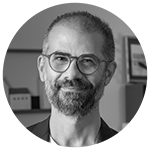
Rober Koptaş has spent most of his career working at Aras Publishing and the Agos newspaper in the capacity of Editor in Chief. Koptaş has prepared many books for publication and contributed countless newspaper columns and journal articles. He published his first novel, Unufak, in 2024. Koptaş currently works as a writer and an independent editor. He also is working on his second novel.

Gökçer Tahincioğlu has been working as Executive Editor and Ankara Bureau Chief at T24 since 2018. Prior to joining T24, Tahincioğlu worked at the Milliyet newspaper between 1997 and 2018, holding a diverse set of posts such as Managing Editor at the Ankara bureau, Judiciary Correspondent, and Columnist. Through his reporting, articles and photographs, Tahincioğlu won various journalism awards given in the honor of Turkey’s acclaimed journalists such as Musa Anter, Metin Göktepe, and Abdi İpekçi. He was also awarded with the Press Freedom Awards, given by the Contemporary Journalists Association and the Turkish Journalists Association.  He has authored numerous books closely tied to his profession as a journalist, including Bu Öğrencilere Bu İşi mi Öğrettiler?: Öğrenci Muhalefeti ve Baskılar (2013, Kemal Göktaş'la birlikte), Beyaz Toros: Faili Belli Devlet Cinayetleri (2013), ve Devlet Dersi: Çocuk Hak ve İhlallerinde Cezasızlık Öyküleri (2016) ve, Çünkü Umurumuzda: 11 Sivil Toplum Başarısı (2022). He published two edited volumes, Yaralı Hafıza and Kayıp Adalet. His first novel, Mühür, was published in 2018. He won the Yunus Nadi Fiction Prize with his second book, Kiraz Ağacı. His third and the last novel, Sabahattin Ali’yi Ben Öldürdüm came out in September 2023.

Born in Istanbul in 1972, Karin Karakaşlı is a poet and an author. After graduating from Boğaziçi University’s Department of Translation and Interpreting, she completed her Master’s degree in Comparative Literature at Yeditepe University. She worked for many years at the Agos newspaper and regularly contributed articles to Radikal 2 (Arts and Culture section), and Gazete Duvar. Karakaşlı has authored books in various genres, including short stories, novels, children's and young adult literature, as well as poetry.

Professor Arus Yumul received her Bachelor’s degree in Political Science from Boğaziçi University and his PhD in Sociology from Oxford University. Yumul retired from the Socilogy Department, which she founded, at Bilgi University. Her academic work and research concentrating on ethnic identities, minorities, discrimination, body and popular culture were published by prestigious outlets both in Turkey and abroad.

Luiz Bakar is an attorney and advocate for minority rights. Born in 1943, Bakar attended Notre Dame de Sion. She graduated from Grenoble University’s Faculty of Law. In addition to working as an independent attorney, Bakar took on the legal representation of numerous Armenian foundations in Turkey. She is among the founders of the Agos newspaper. She served as Press Secretary for the Patriarchy for over 10 years during Patriarch Mesrob Mutafyan’s tenure. Bakar also translated various works from French to Armenian for Aras Publishing.

Lora Baytar is Director of Vakıflıköy Museum and President of Vakıfköy Women’s Cooperative. Born in Istanbul in 1977, Baytar completed her elementary and secondary education at the İstanbul Şişli Kurtuluş High School. She enrolled at Istanbul University’s Art History Department in 1995. Shortly after graduating in 1999, Baytar was admitted to the  Graduate Program in Art History within the Social Sciences Institute at the Istanbul Technical University. She was awarded her graduate degree in 2005 upon completing her thesis, titled “The Galata Surp Kriko Lusavoriç Church and its Relation to Armenian Architecture.” She worked as Reporter, Editor, and Graphic Designer at Agos from 2000 to 2013. She married Cem Çapar from the Vakıfköy Armenian community and moved to Hatay in 2013.  Baytar worked at the Caritas Foundation between 2013 and 2014 as part of the support process for the Syrian refugees in Hatay Kırıkhan. She served as Art Historian during the transformation of the Hatay Archeology Museum from 2014 to 2019. Baytar has also been working as a teacher at public schools under the Ministry of National Education.

Ohannes Şaşkal was born in Istanbul in 1959, and his childhood was spent in Amasya. After attending Hürriyet Elementary School there for two years, he continued his education in Istanbul at Halıcıoğlu Nersesyan Elementary School and subsequently as a boarding student at Surp Haç Tıbrevank High School. In 1982, he graduated from Istanbul University Faculty of Pharmacy. His cartooning adventure began in 1977. His first cartoon was published in Cumhuriyet newspaper in February 1978. Following that date, his work appeared under the signature Ohan. in newspapers such as Cumhuriyet, Demokrat, and Dünya, as well as in numerous culture and arts magazines including Yeni Güney, Bilim ve Sanat, Yarın, Gül-Diken, and Adam Sanat. From the beginning, he adopted an aesthetic style of drawing that derived its power from a wordless, minimalist, imagistic, and graphic design-based expression. Between 1979 and 1980, he held joint exhibitions in Ankara, Istanbul, and Eskişehir together with his cartoonist friend Ümit Kartoğlu. Among these exhibitions, K-Ömür resonated not only for its thematic coherence but also for its economic and humanistic-social qualities. He participated in numerous group exhibitions both domestically and abroad, and held solo or joint exhibitions. Most recently, in 2024, he exhibited a selection of his recent work under the title Toter Winkel /Kör Nokta (Blind Spot) at the City Library in Erlangen, Germany. Starting in 1980, his work appeared for many years in the daily Armenian-language newspaper Nor Marmara. Since 2007, he has been drawing regularly for Agos newspaper. In December 2025, he was awarded the Aziz Nesin Humor Award as part of the 9th Izmir Humor Festival. He has four cartoon albums: bkz. (1997, Nor San magazine publication), Karakutu (2001, Aras Publishing), Le Chiendent /Ayrık Otu [together with Ümit Kartoğlu, in memory of Hrant Dink], (December 2007, self-published), Placebo (2010, Aras Publishing). Since 1993, he has been translating the works of Armenian poets into Turkish. His translations from Zahrad have been compiled in seven books published by different publishing houses at different times. Among these, Bambaşka Bir Bahar, which encompasses Zahrad's poems translated to date, was published in 2020; Kediler, which compiles his thematic poems, in April 2017; and Bi' Âlem Gigo in November 2024, all released by Aras Publishing. Apart from Taniel Varujan's final book Ekmeğin Şarkısı, Turkish translations of the complete poems of Garbis Cancikyan, Yervant Gobelyan, and Haygazun Kalustyan have also been published as books by Aras Publishing. His translations from various Armenian poets have long been published in the bimonthly magazine Yeni E, where they continue to appear.

Kemal Gökhan Gürses is a cartoonist, whose comic strips and cartoons were published daily in Turkey’s prestigious newspapers and humor magazines such as Mikrop, Gırgır, Fırt, Atmaca, Cumhuriyet, Hürriyet and Radikal. Born in Istanbul in 1964, Gürses contributed to the Agos newspaper with his cartoons for the first three years following the newspaper’s foundation. He also wrote a play, titled “histanbul,” which was performed at Garajistanbul. The play won the İsmet Küntay Theater Awards in the category of Special Jury Award as well as the Best Stage Design Award. Furthermore, Küntay adapted Hayko Bağdat’s book, Salyangoz, for the stage; directed Özcan Ateş’s stand-up show in Kurdish, “Dawiya Dawi”; and prepared and staged the play “Qırıx,” which itself is an interpretation, for the Diyarbakır City Theater. He has written scripts for television shows, produced commercials, performed voice-acting, and worked as a graphic designer. He continues to produce commercials to date. 12 Eylül Öncesine Dönmek İstiyorum, Aydınlarla Zontaların Savaşı, Aslında Bunların Hepsi Hikâye, Boşver Nasılsa Halk Anlamaz, Zontelektüel Abdullah, O Günlerde Sanki Hiç Yoktuk, Kırkından Sonra, Ayşegül Savaşta (Irak Şahini), Ya Ameliyatlı Yerime Gelseydi - Bir Gezi Parkı Hikâyesi , Teo’nun Yaşamı 1-2-3 - Mandolin Çocuk constitute some of the books Gürses has authored.
Born in 1969 in Istanbul,  Yetvart Danzikyan completed  his primary, middle, and high school education at the Pangaltı Mıhitaryan Armenian School. He was  working as Editor at İletişim Publications when he contributed to the foundation of  Agos. Between 1998 and2013, he worked as News Director at NTV and CNBC-e and as a columnist at radikal.com.tr. His writings have been published in various magazines, including Birikim. Since 2015, Danzikyan has been at the helm of Agos in the capacity of Editor in Chief and has written for the newspaper since 2007.

Aylin Vartanyan Dilaver pursued her education in political economy and literature at Barnard College and Columbia University. She continued her career by teaching critical reading and writing courses at Boğaziçi University, School of Foreign Languages. Since the establishment of the university’s Peace Education Practice and Research Center in 2006, she has actively worked as an instructor, organized seminars and conferences, and participated in curriculum development projects that blend critical pedagogy with an arts-based perspective. Her encounter in 2005 with Augusto Boal’s Theatre of the Oppressed approach and the training she received strengthened her belief in the role of art in social transformation. In 2010, she began her doctoral studies at the European Graduate School in Switzerland. After obtaining her CAGS degree, she started doctoral research in Istanbul, focusing on a post-memory approach combined with photo-based storytelling with Armenian women living in the city. She has been passionately conducting workshops on "Expressive Arts and Conflict Transformation" since 2011, starting with members of the Yel Değirmeni subgroup of the Social Work Club at Boğaziçi University. Since February 2021, she has been a member and workshop facilitator at the Expressive Arts Institute Istanbul. Since 2022, as a retired lecturer, she has continued teaching at the university and organizing expressive arts-based workshops in educational settings.