This year, we commemorate the 70th anniversary of the Pogrom of September 6-7, 1955. In these organized attacks targeting Armenians, Greeks, Jews, and Syriacs living in various cities, primarily Istanbul, thousands of homes, businesses, and sacred places were burned, destroyed, and looted. This event has left deep scars on the collective memory and lives of minorities in Turkey. Not forgetting this painful page of history reminds us once again of the vital importance of strengthening the culture of coexistence to prevent similar events from happening again, and to achieve this, how crucial it is to know and understand one another.
With this in mind, as a continuation of our Minority Rights 101 newsletter of October 3, 2024, we would like to introduce you to the current work and resources we have produced as part of the Hrant Dink Foundation’s Minority Rights Academy.
Through all these efforts, we hope to contribute to the strengthening of the culture of coexistence in Turkey, the dissemination of a rights-based perspective, and the increase of social awareness.
WHAT HAPPENED ON SEPTEMBER 6-7, 1955?
The events that began on September 6, 1955, with the headline “Atatürk’s house was bombed” in the Democratic Party-affiliated newspaper, Istanbul Express constitute one of the darkest pages in the history of Turkey. The news, announced on state radio at 1:00 pm and based on the claim that a bomb had been thrown at the house where Atatürk was born in Thessaloniki, Greece, ignited organized attacks against Greek, Armenian, Jewish, and Syriac citizens. During this two-day hysteria of mass destruction and looting, thousands of stores, churches, synagogues, newspaper buildings, and cemeteries in Istanbul and Izmir were destroyed. According to official sources, 4,214 homes, 1,004 workplaces, 73 churches, 1 synagogue, 2 monasteries, and 26 schools were damaged. The attacks were particularly concentrated on religious sites; churches were turned into ruins within a few hours, dynamite was used to blow them up, sacred objects were destroyed, and graves were opened.

Photo: Ara Güler, Copyright: Ara Güler Doğuş Sanat ve Müzecilik A.Ş.
For those who wish to read further, we would like to share a personal account, a photo archive, and an academic study. After the pogrom, the Gökçeyan family, who owned a small yarn store in the Grand Bazaar, was forced to settle in Lebanon. Krikor Gökçeyan, who was seven years old at the time, recounts in an interview with the newspaper Agos that his parents felt great disappointment and resentment during the events of September 6-7: “They decided to leave Turkey because they could not find a reason for so much anger and hatred.” The unique photo archive of Dimitrios Kalumenos, the photographer of the Ecumenical Patriarchate at the time, sheds light on the forgotten and dark face of the violence that night and the damage it left on people’s bodies, lives, and memories, in the book September 6–7, 1955: Through the Lens of the Patriarchate Photographer Dimitrios Kalumenos, "Both Your Property and Your Life!" Vol. 2 published by istos publishing house and compiled by journalist Serdar Korucu. Dilek Güven’s book, Cumhuriyet Dönemi Azınlık Politikaları ve Stratejileri Bağlamında 6-7 Eylül Olayları [The Events of September 6-7 in the Context of Republican Era Minority Politics and Strategies], published by İletişim Publishing House, is one of the most comprehensive academic studies on the subject.

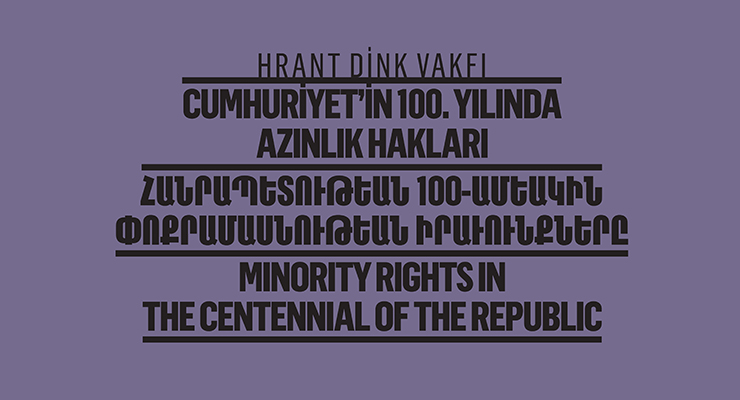
Our book, which includes the papers presented at the “Minority Rights in the Centennial of the Republic” conference held on November 17-18, 2023, at the Hrant Dink Foundation Anarad Hığutyun Building’s Havak Hall, has been published in Turkish and English. In the books, researchers and academics examine the rights of different minority groups living in Turkey, the transformation these rights have undergone, and the problems minorities have faced, along with case studies.

In the podcast series “Azınlık Hâlleri,” we continue to discuss minority rights policies, issues, and possible solutions within and outside Turkey. Our conversations with experts in the field serve as a comprehensive educational resource. This year, we spoke with Lerna Ekmekçioğlu about the Treaty of Lausanne and the citizenship policies of the early Republican era; with Yeşim Bayar about the Surname Law and the impact of name policies on minorities; with Anna Maria Beylunioğlu about the politics of food and its importance for minority communities; with Nazan Maksudyan about the concept of childhood and what it means to be a child in minority communities; with Melissa Bilal about the importance of music for minorities; with Seda Altuğ about the situation of minorities in Syria; with İlay Romain Örs about the background of the Greek expulsions of 1964; with Elif Kevser Özer about the experiences of Greeks during the 1964 expulsions based on testimonies; with Şerif Derince about the right to a mother tongue, the problems experienced in mother tongue education, and possible solutions; and with Sergen Gül about the discrimination faced by the Roma people and the environmental injustice they encounter. You can access the episodes here. Our podcast series will continue; if you have topic suggestions or guest recommendations, please email us at This email address is being protected from spambots. You need JavaScript enabled to view it..

The in-person seminars of the second term of the HDV Minority Rights Academy, which we established last year with the support of the European Union, were held from May 23-26, 2025. In the four-day program, twenty participants from different regions of Turkey had the opportunity to learn from experts in the field of minority rights from Turkey and abroad about the scope of minority rights, its implementation in Turkey, examples from different countries, and advocacy strategies. You can access the academy’s content and program here.
GRANT
As part of the HDV Minority Rights Academy, we also have a grant program available to participants. Participants who successfully completed the 2024 HDV Minority Rights Academy earned the right to apply to the Grant Program through their institutions. Out of nine applications submitted to the program, the selection committee decided to support five projects. These projects, from various fields, aim to create awareness and strengthen advocacy in the area of minority rights.
Grant recipients and their projects:
- Beyoğlu Üç Horan Ermeni Kilisesi Vakfı – Legal Entity and Property Issues of Community Foundations in the Context of Minority Rights
- GOLA Kültür Sanat ve Ekoloji Derneği – From Stones to Words: Tracing Laz Culture
- Kültürel Değişim Derneği – Antakya Local Arabic Dialect Language Cards
- Rengarenk Umutlar Derneği – A Journey Through Social and Spatial Memory in Sur
- Sivil ve Ekolojik Haklar Derneği – Un Libro Abierto – Open Book

WORKSHOPS
As part of the activities of the HDV Minority Rights Academy project, we are conducting workshops on various topics such as the problems faced by minorities, their solutions, and developments related to minority rights. We held the first of these on November 20, 2024, at the Fener Maraşlı School in collaboration with istos publishing and the Hrant Dink Foundation, in the context of a conference titled “The 1964 Expulsions and the Istanbul Greeks on Its 60th Anniversary.” As a result of the decision made in 1964, Greek nationals residing in Istanbul began to be deported, and in the following weeks, tens of thousands of Greeks, including Turkish citizens, were forced to leave Turkey. Throughout the conference, the 1964 expulsions were examined in their various dimensions with the participation of academics and researchers as well as witnesses who experienced the exile. We will continue to share information about the workshops we will be organizing in the coming weeks.
WE ARE WAITING FOR YOU AT THE 23.5 HRANT DINK SITE OF MEMORY
While commemorating September 6-7, we must not forget that this historical trauma is part of the experience of minorities in Turkey. In this context, we recommend that you visit the 23.5 Hrant Dink Site of Memory, which sheds light on the life and struggle of Hrant Dink and the history of the Agos newspaper. The site offers the opportunity to experience the continuity of the struggle for minority rights and its relevance today.