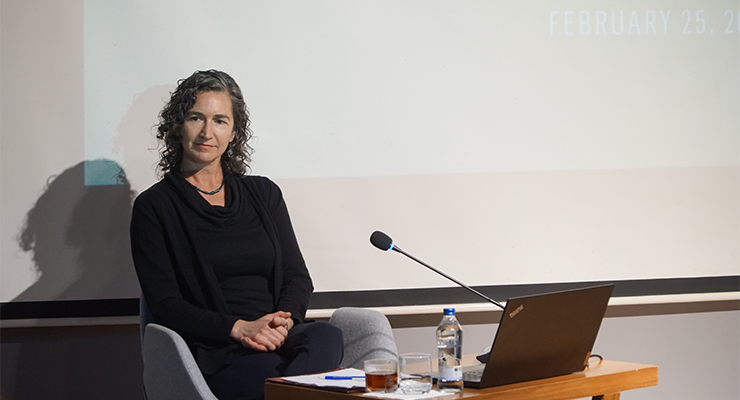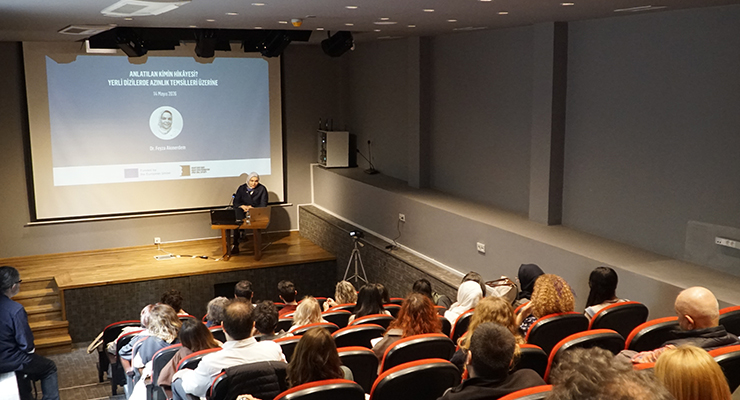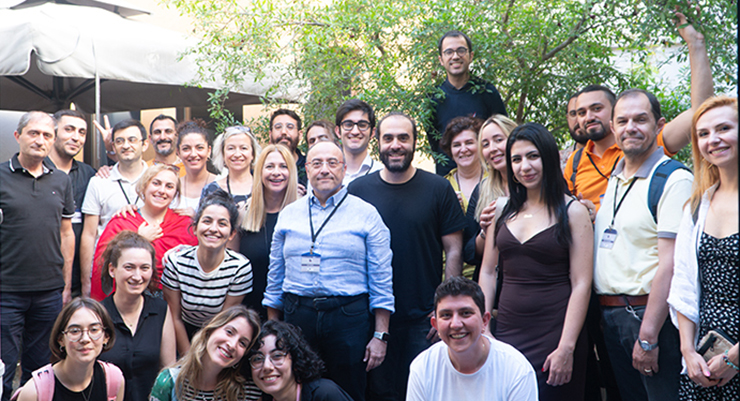
The event titled “Women of Rebetiko: A Journey in the Footsteps of Music and Memory”, organized by the Hrant Dink Foundation Minority Rights Academy in collaboration with artist and independent researcher Lidya Durmazgüler, took place on March 10, 2026, at the Anarad Hığutyun Building.
The event began with a presentation introducing Women of Rebetiko, a project initiated by Lidya Durmazgüler. Through this interdisciplinary music and memory project, which aims to provide visibility to the often overlooked and marginalized voices of women in rebetiko, Durmazgüler explored the historical and cultural background of rebetiko music. She particularly focused on the social transformations of the late Ottoman period from the 1920s onwards, as well as the impact of migration and the effects of the 1922 population exchange on music. It was emphasized that rebetiko emerged in the multicultural environments of port cities such as Istanbul, Izmir, and Thessaloniki, and that it carries themes such as migration, poverty, solidarity, and resistance.
The live performance that followed the presentation focused on the stories and repertoire of women rebetiko artists whose voices have often remained in the background of the genre’s history. On stage, Durmazgüler was accompanied by Ali Baran Özcan on bouzouki and Kerim Arafa on guitar. During the performance, songs from early female rebetiko singers were performed, while also discussing how these artists expressed experiences of migration, memory, and identity through music.
By addressing the relationship between music and collective memory, the event aimed to make the role of women in the rebetiko tradition more visible and offered participants an opportunity to reflect on the multilayered musical heritage of the Eastern Mediterranean.
You can watch the recording of the event on this page via YouTube.