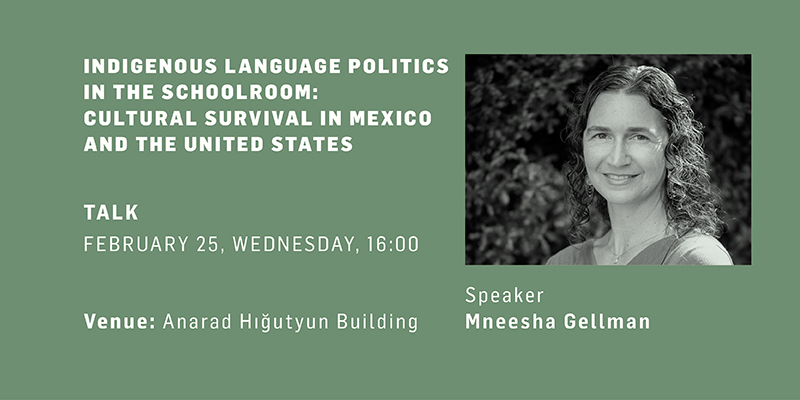
Indigenous Language Politics in the Schoolroom: Cultural Survival in Mexico and the United States
February 25, 2026, Wednesday
16:00 - 18:00
Venue: Hrant Dink Foundation Anarad Hığutyun Building
Papa Roncalli St. No: 128 Harbiye, Şişli/İstanbul
*The talk will be in English and there will be no simultaneous translation.
To register for the event, please fill out the form.
Public school classrooms around the world have the power to shape and transform youth culture and identity. In Indigenous Language Politics in the Schoolroom: Cultural Survival in Mexico and the United States, Mneesha Gellman examines how Indigenous high school students resist assimilation and assert their identities through access to Indigenous language classes in public schools. Drawing on ethnographic accounts, qualitative interviews, focus groups, and surveys, Gellman’s fieldwork examines and compares the experiences of students in Yurok language courses in Northern California and Zapotec courses in Oaxaca, Mexico. She contends that this access to Indigenous language instruction in secondary schooling serves as an arena for Indigenous students to develop their sense of identity and agency, and provides them tools and strategies for civic, social, and political participation, sometimes in unexpected ways.
Showcasing young people’s voices, and those of their teachers and community members, in the fight for culturally relevant curricula and educational success, Gellman demonstrates how the Indigenous language classroom enables students to understand, articulate, and resist the systemic erasure and destruction of their culture embedded in state agendas and educational curricula. Access to Indigenous language education, she shows, has positive effects not only for Indigenous students, but for their non-Indigenous peers as well, enabling them to become allies in the struggle for Indigenous cultural survival. Through collaborative methodology that engages in research with, not on, Indigenous communities, Indigenous Language Politics in the Schoolroom explores what it means to be young, Indigenous, and working for social change in the twenty-first century.
|
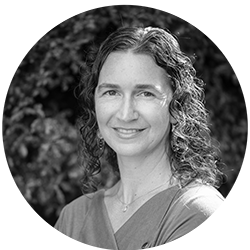
Mneesha Gellman Dr. Mneesha Gellman is associate professor of political science in the Marlboro Institute for Liberal Arts and Interdisciplinary Studies at Emerson College. She is the author of many books, including Learning to Survive: Yurok Well-being in High School, undertaken collaboratively with the Yurok Tribe of California; Misrepresentation and Silence in United States History Textbooks: The Politics of Historical Oblivion; Indigenous Language Politics in the Schoolroom: Cultural Survival in Mexico and the United States; and Democratization and Memories of Violence: Ethnic Minority Social Movements in Mexico, Turkey, and El Salvador, and has also written about her use of collaborative methodology in multiple outlets. Dr. Gellman is the founder and director of the Emerson Prison Initiative, which brings a BA pathway to incarcerated students in Massachusetts. She edited Education Behind the Wall: Why and How We Teach College in Prison, and co-edited Unlocking Learning: International Perspectives on Education in Prison, and regularly comments about education and politics in the media. Based on more than twenty years of fieldwork in Latin America on issues of violence and democratization, she also serves as an expert witness on country conditions in Mexico and El Salvador in US immigration courts. |

Bu proje Avrupa Birliği tarafından finanse edilmektedir.