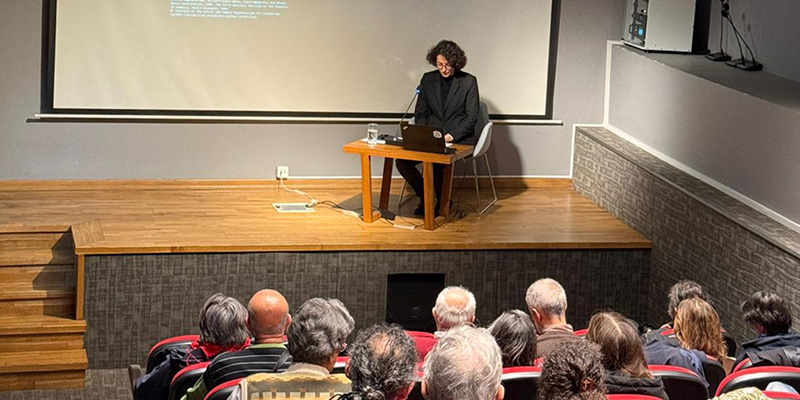
In the talk given on January 8, 2025 at the Anarad Hığutyun Building, Marianna Hovhannisyan examined how archival content and materials related to Armenians are handled, approaching the concept of the “archive” as both a theoretical and a contested field of knowledge. She noted that while academic research largely relies on historical methodologies, archival institutions and digital humanities initiatives tend to develop approaches that prioritize preservation, access, and community engagement. Drawing on her ongoing book project, Double Assimilations, Empty Fields, and Orphan Objects: Armenian Archival Imaginaries, Hovhannisyan explored how Armenian cultural production is defined through fragmentation, loss, and archival absence, with a particular focus on examples of modernist-era art and craft. She emphasized that contemporary metadata classifications and object theories shape how these material fragments are positioned and circulated in transnational archives as “folk art” or “craft.”The talk questioned which forms of knowledge are made visible by existing archival frameworks and which are excluded, and opened a discussion on the possibilities of developing new epistemic perspectives through and beyond these frameworks.

RELATED CONTENTS
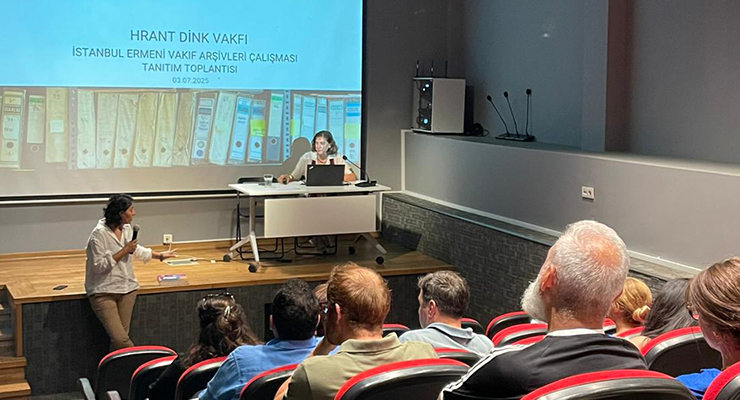
On July 3, 2025, the HDF Archive Team held a meeting in the Havak Hall of the Anarad Hığutyun Building with representatives of Armenian foundations in Istanbul to share information about the Foundation's archival work.
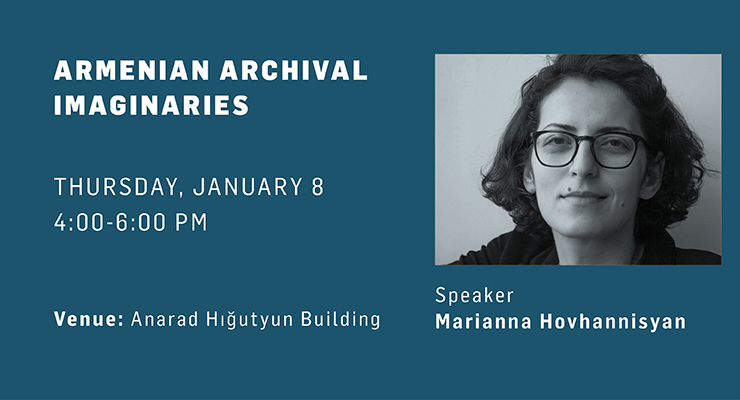
In this talk, Marianna Hovhannisyan situates the concept of "archive" as a theoretical inquiry and a site of contested knowledge, examining how Armenian cultural production is defined by fragmentations and archival absences.
In the panel 'Combating Discriminatory Discourse: Theoretical Discussions & European Experience regarding Hate Speech Laws', the boundaries between freedom of expression and hate speech and European hate speech laws were discussed.