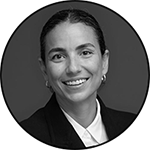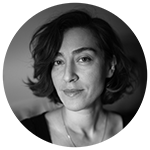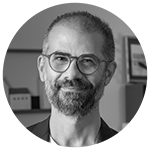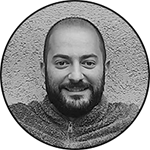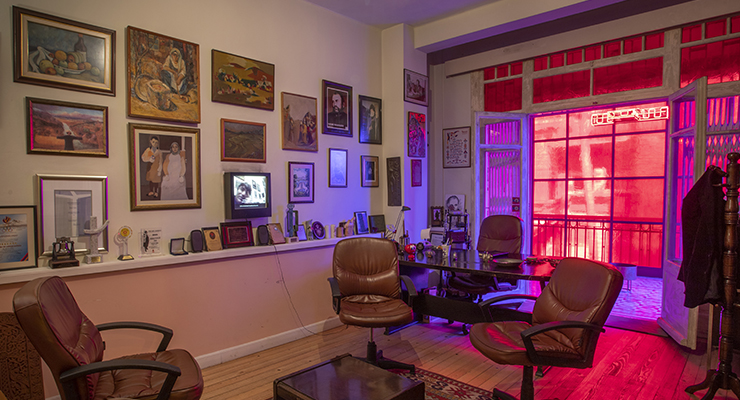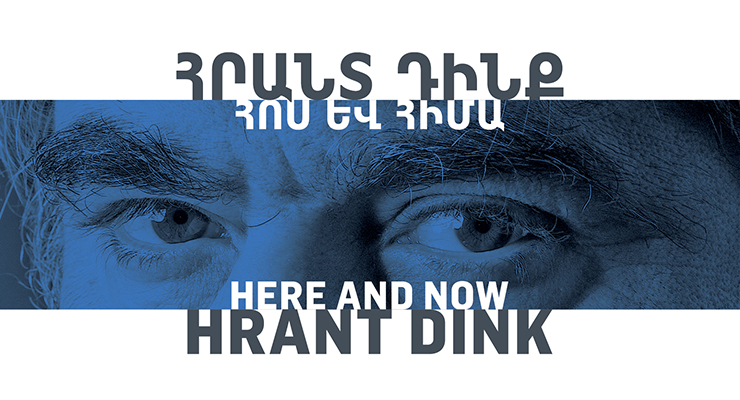
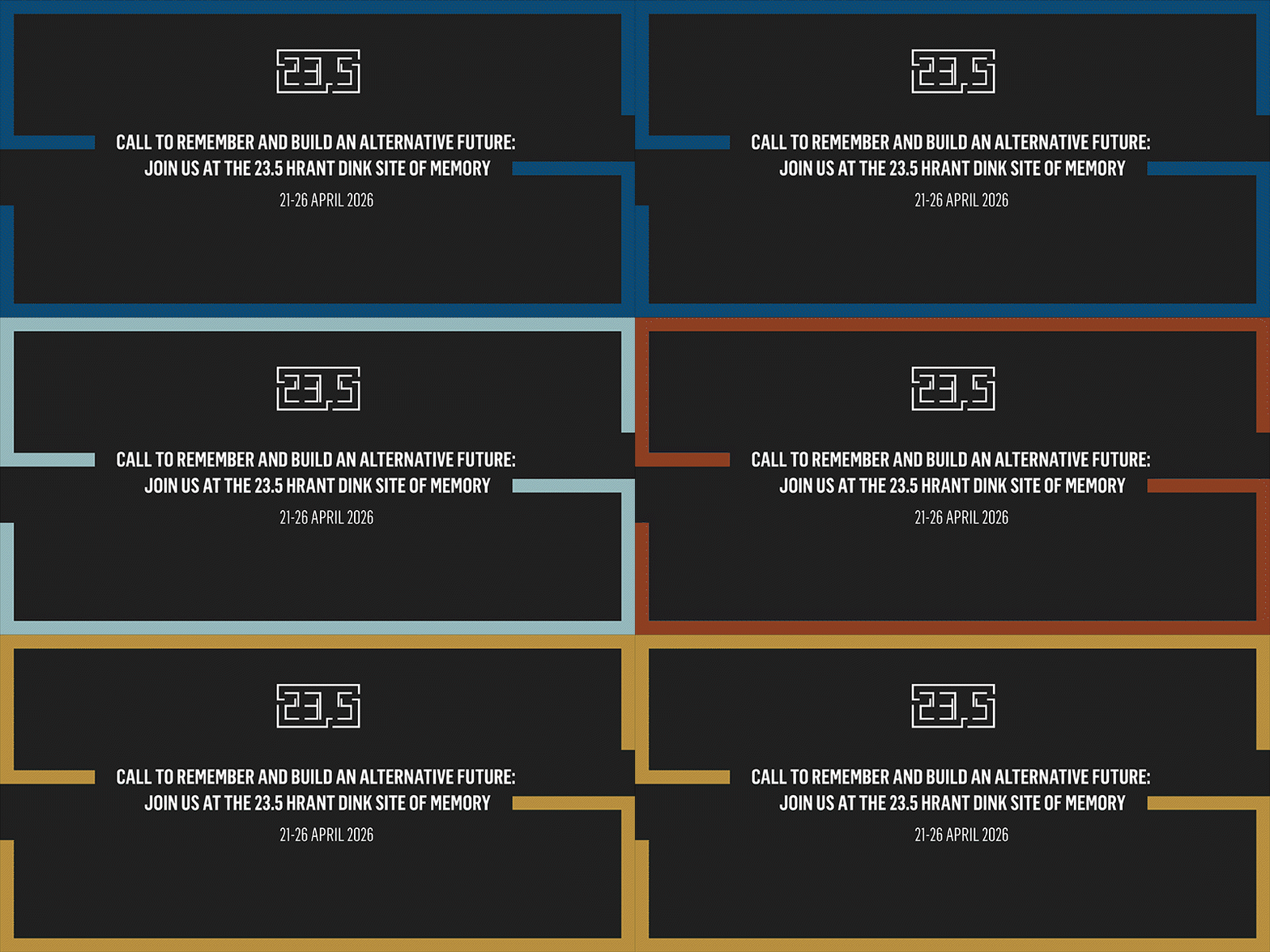
23.5 Hrant Dink Memory Site invites you to a week of commemoration and remembrance events. Throughout the week of April 20 – 26, which corresponds to the seventh year of the Site’s opening, we will revisit the themes emphasized in Hrant Dink’s article, titled “23,5 April,” by organizing a variety of events. Published in Agos on April 23, 1996, Dink’s “23,5 April” article is a pendulum between pain and hope, a pledge between the past and the future, and an invitation for deep transformation.
There will be workshops, events and music recitals at the 23,5 Hrant Dink Site of Memory during the week.

We will also bake Easter bread to celebrate the Easter Holiday in April and cook irmik helvası, a delicacy that is often served during the periods of grieving and symbolizes solidarity at difficult times..
 
You are invited to join us to create a space for remembrance, contemplation, and dialogue. 
By participating in these events, you can contribute to a future erected upon the pillars of the collective voice of the truth and tolerance.
Event 1: Memory Board

A board that is dedicated to the Armenians who lost their lives in 1915 will be on display at 23.5. The board, which will be launched with the installation of the pictures of the Armenian intelligentsia who were arrested on the night of April 24, will offer space for our visitors to share their feelings, thoughts as well as the names and the pictures of their lost loved-ones.
  • Share your feelings and thoughts: Contribute with a card on which you can express your feelings and thoughts over what April 24 means to you. 
  • Bring the photographs you would like to share: You can place the names and photographs of those you would like to remember on the memory board.
  • Date: The memory board will be open for visitors’ contributions between Tuesday, April 21 and Sunday, April 26.
  • Location: 23.5 Hrant Dink Site of Memory
  • Materials: The cards that you can place on the memory board will be provided by the 23.5 Hrant Dink Memory Site team. Visitors can also bring their own pictures. 
Event 2: Leave Your Mark for Hope

We invite all children to leave their “mark for hope” by using the colors of a rainbow on the artist Sarkis’ second permanent installation at the Site, titled “Children’s Call for Rain at 23.5 through the Colors of Rainbow.” These colorful fingerprints are anticipated to represent the unique influence that children impress upon our world and a future full of hope.
  • Date: April 21 – 26, 2026
  • Location: 23.5 Hrant Dink Site of Memory
  • Materials: All materials for the installation will be provided by the team at the 23.5 Hrant Dink Site of Memory.
Event 3: Memory Sites Workshop  

A selection of memory sites, museums, and monuments dedicated to confronting difficult and violent pasts manifested by genocide, apartheid regimes, military coups, and wars will be presented. The participants will discover memory sites, museums, and narratives that exposes the atrocities of difficult pasts while learning about the inspiring memorialization initiatives undertaken by various institutions around the world.
Event 4: Is Hope a Possibility? On Memory, Action, and Memorization  

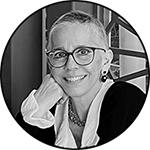
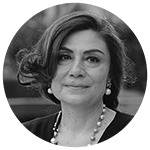
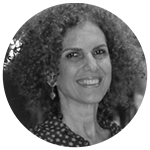
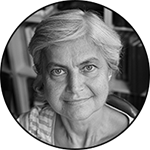
In this candid discussion moderated by Zeynep Miraç, we will explore how memory turns into action and imagination, what it takes to confront the extant narratives, and how to develop a relationship with hope. We will hear from three diverse voices at this gathering: Aylin Vartanyan will lead a discussion over how memory and hope come together and remain together bases on her observations of 23.5 Hrant Dink Site of Memory. Ayşe Gül Altınay will elaborate on her perspective on iconoclastic narratives. Last, but not least, Takuhi Tovmasyan will share dreams of the future. We will be meditating together over the crossroads of remembering, resisting, and dreaming.

                Moderator: Zeynep Miraç
                Speakers: Aylin Vartanyan, Ayşe Gül Altınay, Takuhi Tovmasyan

  • Date: April 21, 2026, 17:00-19:00
  • Location: 23.5 Hrant Dink Site of Memory
  • Registiration: Please fill out the form to register for this event.
  • Conversations will take place in a hybrid format (both in a physical environment and online via Zoom).
  • The space for physical attendance is limited to 40 participants.
Event 5: Modes of Remembrance: Memory, Representation, and Future Imaginaries 

You are invited to join us in a conversation moderated by Evrim Altuğ to contemplate together over the different facades of memory.

This gathering will also convene upon the intellectual premise constructed by Ferhat Kentel’s contemplation over remembering and healing together with roots in the local, Ayşe Kadıoğlu’s consideration of the imaginaries of the past and future based on individual histories, and Arus Yumul’s interpretation of 23.5 as an archive.

We will also think collectively on how the transition in cultural production, from multilingualism to nationalism, is embedded in memory, how certain narratives have been obviated and become invisible, and how the relationship that we form with the past shapes the future.

                Moderator: Evrim Altuğ
                Speakers: Ferhat Kentel, Ayşe Kadıoğlu, and Arus Yumul

  • Date: April 22, 2026, 17:00-19:00
  • Location: 23.5 Hrant Dink Site of Memory
  • Registiration: Please fill out the form to register for this event.
  • Conversations will take place in a hybrid format (both in a physical environment and online via Zoom).
  • The space for physical attendance is limited to 40 participants.
Event 6: Breathing with Colour - Children’s Workshop led by Neslihan Koyuncu Bali  

In this workshop, we will come together at 23.5 which is conceived as a space for dialogue that opens room for visitors’ thoughts and emotions, to reflect on leaving traces for the future, inspired by the art of Sarkis, whose permanent work “Salt and Light” is exhibited in 23.5.

During the workshop led by Neslihan Koyuncu Bali on April 23, children will cover a wall-mounted mirror with fingerprints in rainbow colours, inspired by Sarkis’s work “Respiro,” presented at the 15th Venice Biennale. Throughout the event, after interpreting Sarkis’s permanent work “Salt and Light” together, participants will leave their fingerprints on the mirror using paint, accompanied by visuals and narratives from the artist’s other works connected to childhood.

The workshop will also explore the relationship between artistic expression and the act of leaving a trace, drawing connections between the first hand stencil paintings on cave walls and recently discovered children’s hand and footprints believed to date back 200,000 years. Together with the children, we will reflect on what it means to leave a trace at 23.5, in memory and for the future, in dialogue with Sarkis’s works, on the wall facing the April 24 commemoration cards.

  • Date: April 23, 2026, 11:00-12:30
  • Location: 23.5 Hrant Dink Site of Memory
  • Registiration: Please fill out the form to register for this event.
  • Materials: All necessary materials will be provided.
  • The workshop is limited to 7 participants aged 10-15.
Event 7: “In the Mirror of the Past” Workshop with Rober Koptaş

In this session of our workshop series “Understanding Hrant Dink's Way Through His Writings,” where we revisit Hrant Dink’s words and reflect on his texts through today’s questions, we turn to the present through the mirror of the past. Facilitated by Rober Koptaş, the workshop will focus on five texts that help us follow Hrant Dink’s way and approach. Together, we will discuss how he viewed the accursed years* marked by April 24, 1915, and reflect on how this perspective can help us deepen and transform the field of memory today.
*Inspired by writer Yervant Odyan’s autobiographical book Accursed Years
Event 8: Guided Tour of 23.5

The guided tour of the 23.5 Site of Memory focuses on the life and struggle of Hrant Dink and offers a dialogue on the recent history of Turkey in the context of minority rights, human rights and democratization.
Event 9: In the Footsteps of April 24 with Rudi Sayat Pulatyan and Karin Şeşetyan

During the Pangaltı memory walk accompanied by Rudi Sayat Pulatyan and Karin Şeşetyan, we will visit the places where individuals detained in Pangaltı on April 24, 1915 once lived, and listen to their stories.
  • Date: April 24, 2026, 15:30-16:30
  • Location: 23.5 Hrant Dink Site of Memory
  • Registiration: Please fill out the form to register for this event.
  • The memory walk duration is 1 hour.
  • The number of participants is limited to 20 participants.
Event 10: Lusine Hovhannisyan Music Recital 

You are invited to a music recital where pianist Lusine Hovhannisyan will perform selected works by Gomidas Vartabed, accompanied by the harmonium located in the Atlantis Civilization Room at 23.5 Hrant Dink Site of Memory.

Participants will have the opportunity to experience Armenian folk songs such as Krunk, Garun a, Chinar es, and many others, during this special recital that unfolds throughout the rooms and spaces of 23.5 Hrant Dink Site of Memory.

  • Date: April 24, 2026, 18:00-18:30
  • Location: 23.5 Hrant Dink Site of Memory
  • Registiration: Please fill out the form to register for this event.
  • The musical recital duration is 30 minutes.
  • The number of participants is limited to 30 people.
  
Ferhat Kentel, Ferhat Kentel continues his work at the Sociology Shop Association, a research and civil society initiative he co-founded in 2024 as part of Art Venue İzmir (AVİ). Since October 2023, he has been teaching part-time at Yaşar University. He also co-produces and hosts the radio program Hüsnükabul on Açık Radyo with Waseem Ahmad Siddiqui, focusing on refugee rights. After completing his undergraduate degree in Business Administration at Middle East Technical University (METU) in 1981, Kentel received his MA from the Faculty of Political Sciences at Ankara University in 1983 and his PhD in Sociology from the École des Hautes Études en Sciences Sociales (EHESS) in Paris in 1989. He has held faculty positions at the French-language Public Administration Department of Marmara University, the Sociology Department at Istanbul Bilgi University, and most recently at the (now closed) Sociology Department of Istanbul Şehir University. Between 2020 and 2024, he served as the General Coordinator of a foundation he established in İzmir. Kentel has published widely in Turkey and internationally on the sociology of everyday life and emotions, as well as on new social movements, religion, Islamic movements, intellectuals, and ethnic communities. His selected publications include: Euro-Türkler: Türkiye ile Avrupa Birliği Arasında Köprü mü Engel mi? (A. Kaya ile birlikte) 2005; Milletin bölünmez bütünlüğü: Demokratikleşme sürecinde parçalayan milliyetçilik(ler) (M. Ahıska ve F. Genç ile birlikte), TESEV, 2007; Ehlileşmemek, düzleşmemek, direnmek, (Söyleşi: E. Elmas), Hayykitap, 2008, Türkiye’de Ermeniler. Cemaat-Birey-Yurttaş (F. Üstel, G. G. Özdoğan, K. Karakaşlı ile birlikte), 2009; Yeni Bir Dil - Yeni bir Toplum, (Söyleşi: M.T. Çiçek, G. Tunalı Koç), 2012; Kır Mekânının Sosyo-Ekonomik ve Kültürel Dönüşümü: Modernleşen ve Kaybolan Geleneksel Mekânlar ve Anlamlar (Murat Öztürk ile birlikte), TÜBİTAK araştırması, 2017; “Türkiye’de Bir Arada Yaşarız” araştırması, 2022.
Ayşe Kadıoğlu, is Professor of Political Science at Sabancı University. In addition to the books she has authored and edited, she has published numerous articles in leading academic journals, including Middle East Journal, Middle Eastern Studies, International Migration, Muslim World, Citizenship Studies, Critique: Critical Middle Eastern Studies, Middle East Law and Governance, Philosophy and Social Criticism, Social Research: An International Quarterly, Journal of the Society for Armenian Studies, and Women’s History Review. Her recent research focuses on how constitutions and other legal frameworks are used in processes of authoritarianization, examining the phenomenon of “autocratic legalism.” She is also currently working on the biographies of forgotten women of early twentieth-century Istanbul. Kadıoğlu previously served as Acting President of Sabancı University and as Dean of the Faculty of Arts and Social Sciences at the same institution.
Prof. Arus Yumul received her BA in Political Science from Boğaziçi University and her PhD in Sociology from the University of Oxford. She is the founding member of the Sociology Department at Istanbul Bilgi University, from which she later retired. Her research focuses on ethnic identity, minorities, discrimination, the body, and popular culture, and has been published both in Turkey and internationally.
With over 25 years of experience, Evrim Altuğ has written catalogue texts and prepared books for numerous solo and group exhibitions. He has also produced hundreds of articles and interviews for various media outlets, including Radikal, Sabah, BirGün, and Cumhuriyet. A graduate of the Cinema and Television Department at Marmara University’s Faculty of Fine Arts, Altuğ has developed a long-standing practice in art journalism and criticism through his work with institutions such as Kanal 9 TV, Radikal newspaper, the Turkish edition of Newsweek, as well as BirGün and Cumhuriyet, and publications like Gösteri magazine. Since joining AICA Turkey (AICA TR) in 2003, he has taken on various roles at different times. He currently continues to contribute to platforms such as Art Unlimited, Milliyet Sanat, Açık Radyo, and Art Dog Istanbul.
Ayşe Gül Altınay began her education at Diyarbakır Şair Sırrı Hanım Elementary School and continued at a village school in Çüngüş-Karakaya. In 2004, while reading Fethiye Çetin’s “My Grandmother”, she was deeply moved to discover that the places of her childhood were also the settings of Heranuş -Fethiye Çetin’s grandmother- and her tragic journey. Between 2005 and 2015, she conducted research on Islamized Armenians and the ways in which gender shapes the experience and memory of genocide. The book Grandchildren, which she co-edited with Fethiye Çetin, was published in Turkish, Armenian, French, and English. She was one of the co-organizers of the "Islamized Armenians" conference (2013, Hrant Dink Foundation) and the "Workshops in Memory of Hrant Dink" (2008–2015, Sabancı University). Ayşe Gül served on the Founding Board of Directors of the Hrant Dink Foundation, its Advisory Board, and the Advisory Board of the 23.5 Hrant Dink Memory Site. After a 23.5-year journey at Sabancı University, she continues her work at the YerGök Solidarity Association, which focuses on ecology, feminist+ solidarity, transformative activism, and collective healing.
Aylin Vartanyan Dilaver studied political economy and literature at Barnard College and Columbia University. She taught critical reading and writing for many years at Boğaziçi University, where she also was one of the founding educators of the Peace Education Research and Application Center. Her encounter with Augusto Boal’s Theatre of the Oppressed in 2005 opened a path for her to embrace the arts as a language of social transformation and deepened her belief in their transformative power. She began her doctoral studies in Expressive Arts and Social Transformation at the European Graduate School in Switzerland in 2010 and completed her dissertation by bringing together digital storytelling and post-memory approaches in collaboration with Armenian women living in Istanbul. Since 2011, she has been facilitating expressive arts-based workshops on grief, emotional resilience, intergenerational memory, and ecopoiesis, seeking ways to give form to unspoken stories. She is currently a faculty member at the Expressive Arts Institute in Istanbul, founded in 2021. She continues to create arts-based learning environments both within and beyond academia. She also writes texts interwoven with personal memory, collective witnessing, and aesthetic inquiry, while maintaining her contributions as one of the founding members of Parrhesia Collective, a group of Armenian women academics and artists.
Takuhi Tovmasyan was born in Yedikule, Istanbul in 1952. She learnt how to cook at a very young age. Her food memoir book Sofranız Şen Olsun: Ninelerimin Mutfağından Damağımda, Aklımda Kalanlar (Merry Meals: What Remains in My Mind, and Mouth from my Grannies’ Kitchen, Aras, 12th ed., 2021), which blends her experiences as a child growing up in Yedikule with her stories around her family and the kitchens, was published in 2004. She worked at Aras Publications between 1996–2016 as a typesetter in Armenian; for the same publishing house, she translated Boğos Piranyan’s Aşçının Kitabı (The Cookbook of the Chef, 2008) from Armenian into Turkish, and transcribed Vağinag Pürad’s Mükemmel Yemek Kitabı (The Perfect Cookbook, 2010), which was first published in 1926, in Turkish with Armenian letters. Tovmasyan continues to share her knowledge and experiences on food, culinary culture, memory and urban culture at various different platforms, and currently lives in between Bodrum and Istanbul.
Born in Istanbul in 1978, Zeynep Miraç graduated from Koç University’s Department of International Relations after completing her secondary education at Istanbul High School (Erkek Lisesi). She began her career in journalism at Vizyon magazine and later worked for major newspapers including Milliyet, Hürriyet, and Cumhuriyet. She has written portrait pieces for Cumhuriyet, KAFA magazine, and Gazete Oksijen. Miraç hosted the culture and arts program Açık Şehir on TRT Türk. She has written the screenplays for documentary films on the lives of prominent Turkish theatre figures, including Metin Akpınar, Haldun Dormen, Yıldız Kenter, Müjdat Gezen, and Ferhan Şensoy. She also moderated the stage production “Metin Akpınar ile Muhabbet,” produced by BKM. Her books include Seçkin (2021), a biography of translator and theatre critic Seçkin Selvi, and A Life Devoted to the Stage: Metin Akpınar (2022). She currently conducts interviews on literature and everyday life for Oksijen TV.
Neslihan Koyuncu Bali completed her BA (2008) and MA (2015) in Visual Arts at Sabancı University. While continuing her artistic practice, which focuses on photography and installation, she served as Project Coordinator of the 23.5 Hrant Dink Site of Memory at the Hrant Dink Foundation between 2018 and 2022. In 2022, she worked as Project Coordinator on behalf of the Hrant Dink Foundation for Mantı Postası, published in both print and digital formats as part of the 17th Istanbul Biennial. She currently continues her artistic practice in her studio in Beşiktaş.
Rober Koptaş worked for many years at Aras Publishing and Agos newspaper, serving as Editor in Chief of both institutions. He has prepared numerous books for publication and written articles and essays for various media outlets. His novel Unufak was published in 2024. He currently works as a writer and independent editor and is working on his second novel.
Rudi Sayat Pulatyan, is a researcher whose work brings together personal narratives and future technologies within the framework of cultural heritage. He develops projects aimed at disseminating Western Armenian cultural heritage across both digital and physical spaces. In his doctoral research at Koç University, he focuses on how cultural heritage can be reimagined through more interactive and embodied experiences.
After retiring from her faculty post in 2023 at Boğaziçi University’s Department of Earthquake Engineering, Karin Şeşetyan began volunteering on various projects at the Hrant Dink Foundation. Her interest in Armenian history first developed through her research into historical earthquakes in Anatolia as traced in Armenian-language sources. At the Hrant Dink Foundation, she now works on projects related to more recent periods as well. She continues to publish her writings in Agos newspaper under the series titled Karanlıktan Günışığına Arşiv Belgelerinde Ermeni Kurumları.
Lusine Hovhannisyan, is an Armenian pianist who has dedicated many years to teaching piano, with a mission to preserve Armenian culture and promote its rich musical heritage.