
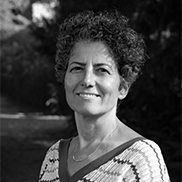
She received her BA in International Relations from ODTÜ, her MA in Sociology from the same university, and her PhD from Boğaziçi University Atatürk Institute. Between 1998 and 2005, she worked as an editor at İletişim Yayınları, and from 2008 to 2018 as Program Coordinator at Depo. She is one of the founders of Siyah Bant, a research platform documenting censorship in the arts in Turkey. In 2014, she participated in the Columbia University AHDA program. Between 2018 and 2025, she served as the director of Anadolu Kültür and currently serves as Chair of the Board. She is the recipient of the 2019 German-French Prize for Human Rights and the Rule of Law.
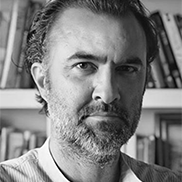
He graduated from Mimar Sinan University State Conservatory, Department of Theater in 1998. Through Krek Theater Company, which he founded in 1999, he wrote and staged numerous plays, most recently "Dünyada Karşılaşmış Gibi" ("As If We Met in This World") in 2019. The television series he wrote have been adapted in the United States, Russia, Spain, and the Netherlands, and sold as ready-made formats to more than 20 countries. In 2003, he became the youngest writer invited by the Istanbul State Theater, adapting Yakup Kadri Karaosmanoğlu's novel "Yaban" for the stage. That same year, he created, hosted, and directed "Defakto" on CNN Türk, followed by "Infoman" on NTV in 2005. His debut feature film "İyi Seneler Londra" (2007) premiered as the opening film at The European Independent Film Festival ECU 2008, and earned him the Best Director award at the Strasbourg International Film Festival. He became the first playwright from Turkey to be invited to the Royal Court Theater Residency program in London. With his play "Güzel Şeyler Bizim Tarafta," he was named Best Playwright in Europe at the 2011 Heidelberg Stückemarkt Theater Festival. Following the Netflix Original Series "Bir Başkadır" ("Ethos"), which he wrote, directed, and produced in 2020, he received the Global Storytelling Award from Abroad Media in the United States and served on the International Jury at Series Mania 2022. His most recent feature film "Cici" was released in 2022, and the Netflix Original Series "Kuvvetli Bir Alkış" in 2024.
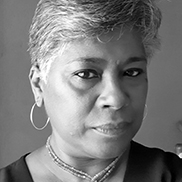
She started her working career as a high school educator. She has been a social justice activist since her student days in the 1980s, and since leaving formal teaching in 1992, she has been involved in the non-profit space. She is a memory studies scholar and has been active in the museum and heritage sector for over 20 years. She currently works as an independent practitioner, with her last fulltime position having been as Director of the District Six Museum in Cape Town where she remains engaged as a research associate and as a member of its board of trustees.
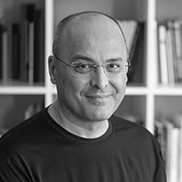
He was born in 1966 in Adana. He graduated from the Department of Food Engineering at Ege University and completed his master's degree and doctorate at Akdeniz University. He began his professional career in the laboratories of the Ministry of Agriculture and Forestry; in 2009 he became assistant professor at Akdeniz University, where he played a key role in establishing the Food Safety and Agricultural Research Centre. In 2016, he was removed from his position by presidential decree for signing the academics for peace petition "We will not be a party to this crime!" He was sentenced to prison for publicly sharing data on environmentally induced cancer that the Ministry of Health had not disclosed; he was acquitted by the Court of Cassation in April 2025.
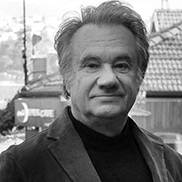
He completed his doctorate at McGill University's Institute of Islamic Studies in 1987. He taught at Princeton University's Department of Near Eastern Studies for four years beginning in 1985, before moving to Harvard University. He has been a member of the Harvard Department of History since 1990. He served as director of the university's Center for Middle Eastern Studies between 1999 and 2004, and again in 2009-2010. He is the recipient of the 2010 Presidential Grand Award for Culture and Arts, and his research focuses on the social and cultural history of the Middle East and Southeast Europe in the pre-modern and early modern periods.

She is an investigative journalist, podcaster, author, and speaker and serves as chief editor of On Spec Podcast, an audio documentary from the field. Born in Afghanistan, she came to the United States as a refugee and spent her teenage years in California before pursuing her undergraduate and graduate education on the East Coast. She holds a master's degree in journalism and Middle Eastern studies from New York University. Over the past 30 years, she has covered news from Afghanistan, Egypt, Iran, Pakistan, and Turkey. She is the author of the reportage memoir "Opium Nation: Child Brides, Drug Lords, and One Woman's Journey through Afghanistan" and co-author of several nonfiction anthologies, as well as the author of the short story collection "The American Way: Stories of Invasion." Her work has been recognized with awards including the Overseas Press Club, and has appeared in publications such as The World, The Verge, Time, The Christian Science Monitor, The New Yorker, and The Financial Times.
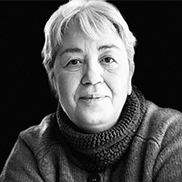
She holds a degree from the Middle East Technical University, Faculty of Architecture, Department of City and Regional Planning. She is an expert with many years of experience in the field of human rights, conducting monitoring and reporting work across its different dimensions, and providing training to civil society organizations on national and international human rights mechanisms, monitoring methodologies, and reporting processes. She supports civil society organizations in integrating a human rights perspective into their advocacy, policy development, and project work within a rights-based approach framework. She has built significant expertise in institutional monitoring, documentation, and strategic reporting in the context of combating impunity and strengthening accountability. She is the recipient of the 2024 German-French Prize for Human Rights and the Rule of Law.
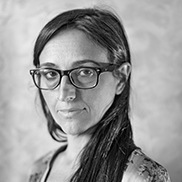
She was born in El Ejido, Spain, in 1970. In 2001 she moved to Morocco, where close relationships with migrant communities determined the direction of her life. As a journalist and researcher, she documented the deadly border crossings between North Africa and Southern Europe, and in 2002 founded the civil society organization Caminando Fronteras (Walking Borders). In 2017 she was accused by the Moroccan judiciary of people smuggling and facilitating illegal immigration; following international solidarity calls the case was dropped in 2019, though she was deported from Morocco in 2021. She has received over 20 awards for her work.
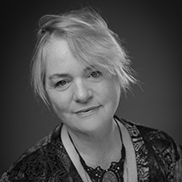
She is Professor of Global Affairs at the European University Institute's School of Transnational Governance in Florence. She leads the Programmes on Transnational Democracy and Global Peace Tech and coordinates interdisciplinary work on transnational democracy, including the EUI Democracy Forum. She is Emeritus Professor at the University of Oxford and has previously taught at Harvard University's Kennedy School of Government and at ENA. She has worked with various European Union institutions, including serving on the European Council's high-level reflection group on the future of Europe (2008–2010), and is a Council member of the European Council on Foreign Relations (ECFR). Her research focuses on global and European governance, addressing questions of legitimacy, mutual recognition, legal empathy, social solidarity, democratic foresight, sustainable integration, post-colonialism, and the relationship between myth, politics, and new technologies in shaping peace and democracy. She is the founder of the demoi-cratic theory approach and explores innovative forms of dialogue and learning through the arts, including the "theater of recognition." Her recent publications include A Citizen's Guide to the Rule of Law (with Adis Merdzanovic, 2021) and Exodus, Reckoning, Sacrifice: Three Meanings of Brexit (2019).
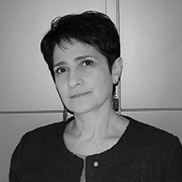
She serves as the director of the Democracy Development Foundation in Armenia, leveraging nearly 25 years of experience in peace and security, democracy, and human rights. Her professional journey includes roles at the Ministry of Education and Science of Armenia, the US National Democratic Institute, the British Embassy Yerevan, the European Endowment for Democracy, and the United Nations. She is the recipient of the UK Foreign Secretary's Innovation Award 2008 for pioneering the first Armenian language computer game titled "Play Democracy, Make it Reality."
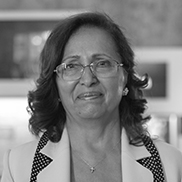
Rakel Dink became involved in human rights activism following the tragic assassination of her husband, the prominent Turkish-Armenian journalist and founder of Agos newspaper, Hrant Dink.
Born to an Armenian family in Silopi, southeastern Turkey, Rakel moved to Istanbul with tens of kids from Anatolia in order to receive education in Armenian Schools. She met with Hrant Dink at Camp Armen, where Armenian children orphans or those away from their families would spend their summers. Rakel and Hrant got married and became managers at Camp Armen in the following years until the property was seized by the state.
Following the death of Hrant Dink in January 2007, Rakel devoted her life to preserving her husband's legacy. She established the Hrant Dink Foundation in 2007, with a mission to protect and uphold human rights in Turkey, preserve the identity and culture of minorities, address polarization, and normalize Turkish-Armenian relations. Rakel continues to be an optimist and maintains that despite the various challenges that she was forced to overcome throughout her life, she has been surrounded by love and kindness. She is hopeful for the future of Turkey and finds joy in her work and her family.
Born to an Armenian family in Silopi, southeastern Turkey, Rakel moved to Istanbul with tens of kids from Anatolia in order to receive education in Armenian Schools. She met with Hrant Dink at Camp Armen, where Armenian children orphans or those away from their families would spend their summers. Rakel and Hrant got married and became managers at Camp Armen in the following years until the property was seized by the state.
Following the death of Hrant Dink in January 2007, Rakel devoted her life to preserving her husband's legacy. She established the Hrant Dink Foundation in 2007, with a mission to protect and uphold human rights in Turkey, preserve the identity and culture of minorities, address polarization, and normalize Turkish-Armenian relations. Rakel continues to be an optimist and maintains that despite the various challenges that she was forced to overcome throughout her life, she has been surrounded by love and kindness. She is hopeful for the future of Turkey and finds joy in her work and her family.